What is a Headless CMS?
The Ultimate Guide for Enterprise Retailers
Key takeaways
A headless CMS stores content as structured data (JSON) and delivers it to any frontend through an API, rather than publishing fixed HTML pages to a single website.
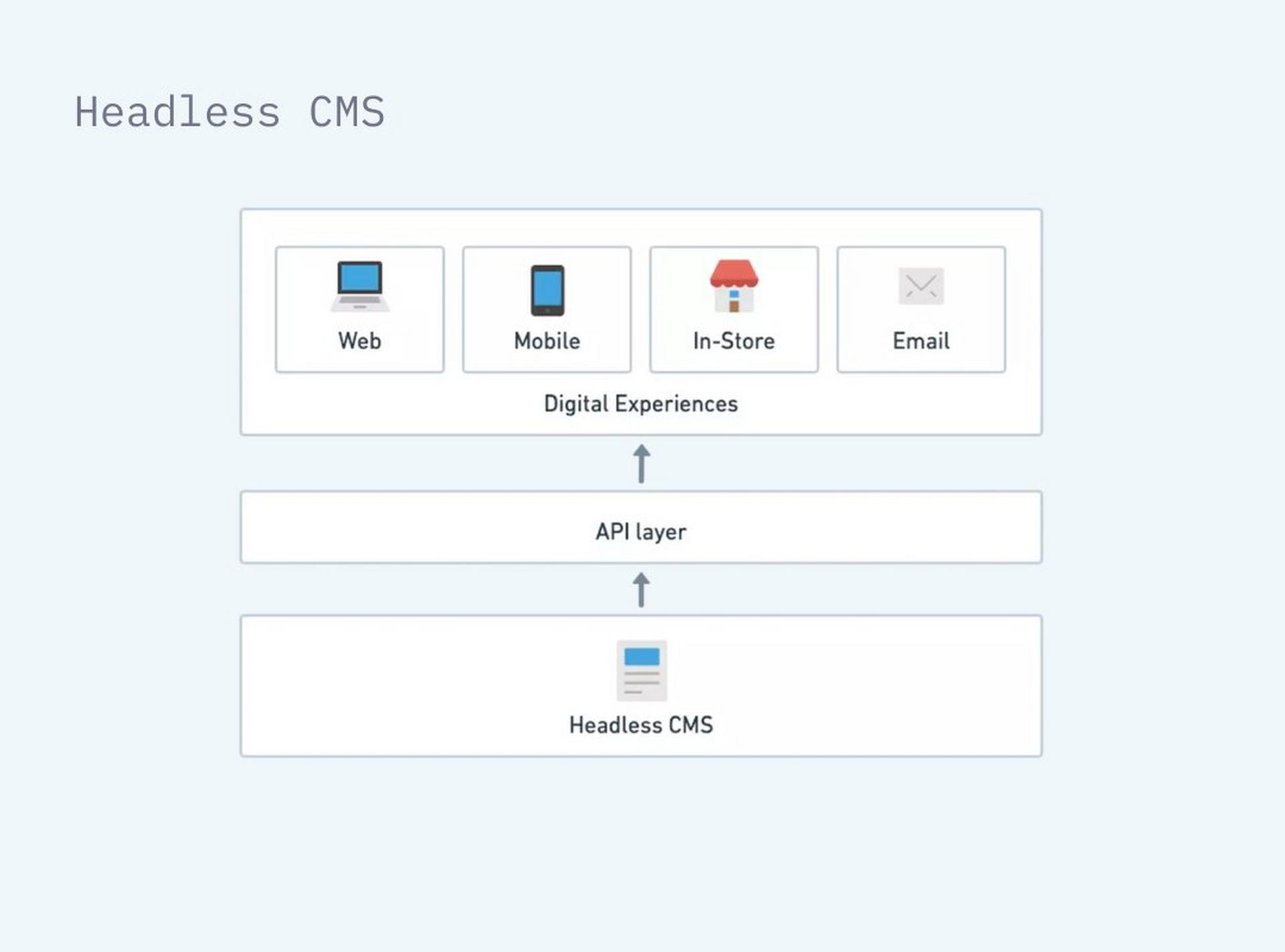
The “head“ is the frontend. Decoupling it from the “body“, the backend repository, lets one content repository serve a website, a mobile app, an in-store kiosk, digital signage and a social commerce feed at the same time.
Headless is the architecture. Composable is the strategy of selecting best-of-breed components. Headless is what makes composable commerce possible.
Agentic AI needs structured content. Monolithic systems store content as flat HTML, which agents cannot reliably read, generate against or publish into.
Generic headless platforms store content well but leave merchandising teams working in forms with no visual preview. Retail-centric headless platforms keep the decoupled architecture and add visual authoring, scheduling and retail content models.
For enterprise retail the question is no longer whether to go headless, but whether the headless platform you choose understands retail.
The era of the “all-in-one“ website builder is over. To keep pace with consumer expectations, brands are decoupling their content from their code. Let’s explore how headless CMS architecture works, why it is replacing traditional systems, and how it lays the foundation for an automated content supply chain.
What is a headless CMS?
At its simplest, a headless CMS is a content repository that is completely separated from the presentation layer.
The “body“ (the backend)
The body is the backend repository, where you create, manage, and store your content. It lives as structured data (JSON), not as designed pages.
The “head“ (the frontend)
The head is the frontend, where your content appears. It could be a website, a mobile app, a smartwatch, an in-store kiosk, or a social commerce feed.
How it works
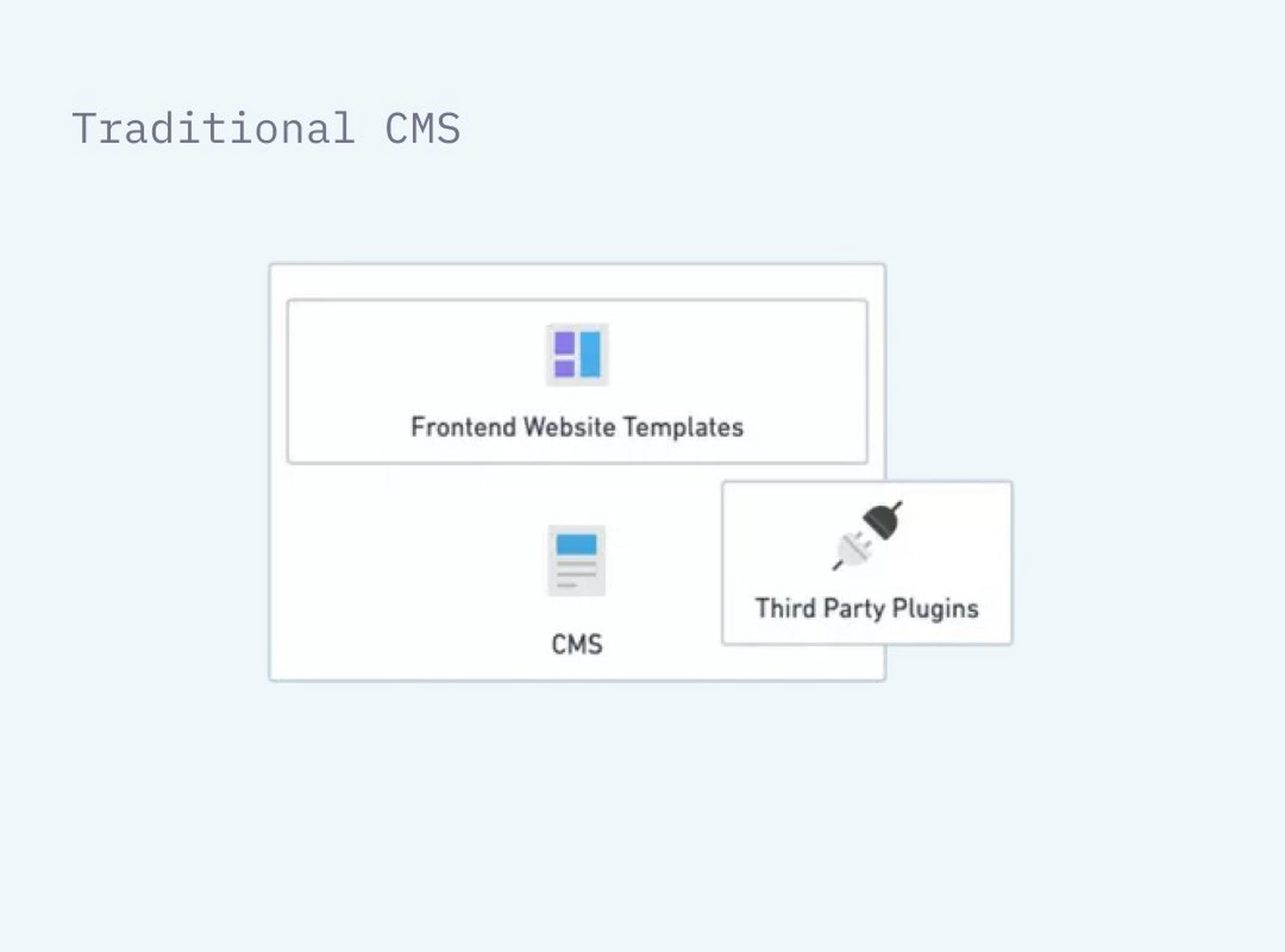
Unlike a traditional CMS (which pushes HTML to a web browser), a headless system is on-demand. It waits for an API call. When a customer opens your mobile app, the app asks the API for the latest content, and the CMS delivers it instantly. For a deeper technical breakdown of how the repository, the API and the frontend fit together, see our guide to CMS architecture.
Why the name “headless“?
It is called “headless“ because the “head“ (the frontend website) has been chopped off the “body“ (the backend repository). This sounds destructive, but it is actually liberating. It means you can have one body with ten different heads.
Headless vs. traditional CMS
To understand the future, you have to look at the limitations of the past. While monolithic systems were built for single websites, headless systems are built for the omnichannel world.
| Feature | Monolithic CMS (Legacy) | Headless CMS (Modern) |
|---|---|---|
| Architecture | Coupled: Frontend and backend are fused together. | Decoupled: Content is stored raw; presentation is code. |
| Flexibility | Low: Changing the frontend risks breaking the backend. | High: Update the app without touching the data. |
| Channels | Single: Built primarily for websites. | Omnichannel: Web, App, Kiosk, Watch, Social. |
| AI Readiness | Low: Content is trapped in HTML blobs. | High: Content is structured data (JSON). |
| Best For | Simple brochures & blogs. | Enterprise retail & complex apps. |
Why enterprise retailers are moving to headless
The primary driver is business agility, rather than just clean code.
True omnichannel delivery
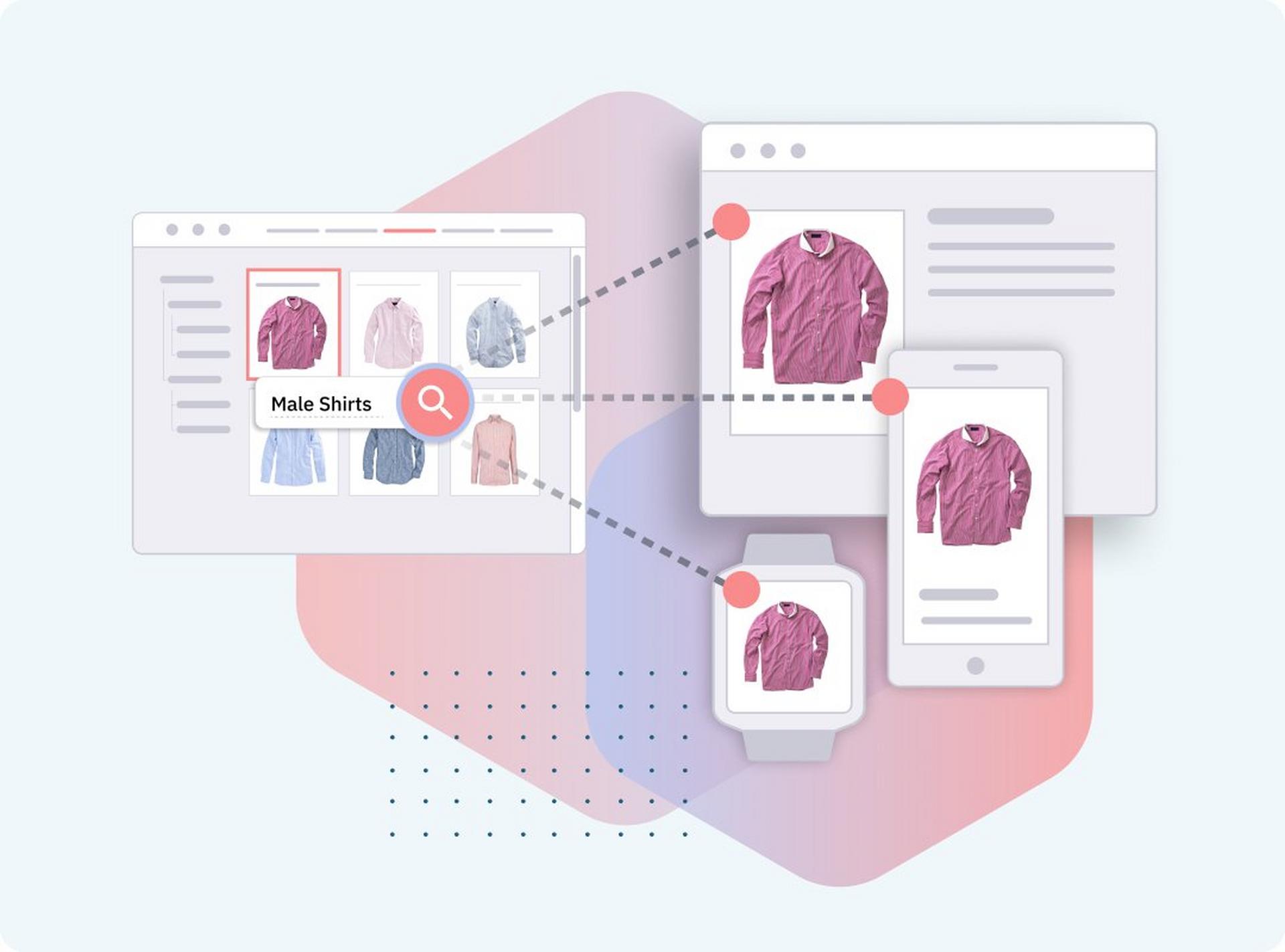
Customers don’t just shop on websites. They shop on TikTok, in apps, and on marketplaces. A headless architecture allows you to centralize your content in one hub and push it to every channel via APIs. You stop managing five different CMS platforms and start managing one source of truth. The scale of that shift is not marginal: eMarketer forecasts that US social commerce sales alone will surpass $100 billion in 2026.
Speed to market
In a monolithic system, launching a new campaign often requires developer intervention to change page templates. In a headless environment, content teams can update data fields that instantly propagate across all touchpoints without a code deploy. Clarks saw this directly: simple content updates such as a promotional banner went from taking 3 to 4 days to going live in 5 to 15 minutes, with the team deploying 2 to 3 times a week instead of once a month and with zero downtime. Clarks reports a sustained 19% uplift in overall conversion.
Best-of-breed technology (MACH)
Headless CMS is a core pillar of MACH Architecture (Microservices, API-first, Cloud-native, Headless). This allows you to build a stack that fits your specific needs. You can choose the best CMS, the best commerce platform, and the best search tool, connecting them all via APIs rather than being stuck with a mediocre all-in-one suite.
Not all headless systems are built for retail
While the headless methodology is sound, the market is split into two categories. It is vital to understand the difference during your evaluation.
Generic headless CMS
These platforms act as simple databases. They store text well, but they lack the visual tools that merchandising teams rely on. They often force marketers to work in “blind forms“ without the ability to preview how content will look on the page.
Retail-centric headless CMS
These platforms (like Dynamic Content) retain the headless architecture but add a layer of visual control. They understand concepts like “Product,“ “Category,“ and “Season.“ They provide visual previews and scheduling tools, ensuring that while the code is decoupled, the marketer is not disconnected from the experience.
Why headless is a prerequisite for AI
Generative and Agentic AI struggle with monolithic systems. Monoliths store content as flat HTML pages, which are difficult for machines to parse and manipulate.
Headless systems store content as structured data. This is the language of AI.
Reading: Because the data is structured, AI agents can read it, understand it, and generate variations of it automatically.
Writing: Because the delivery is API-based, agents can push updates to the system programmatically.
If your strategy involves Agentic AI or automation, a headless architecture is not optional. It is the required foundation.
This is not a distant problem. Gartner forecasts that 40% of enterprise applications will be integrated with task-specific AI agents by the end of 2026, up from less than 5% in 2025. Gartner has separately predicted that traditional search engine volume will drop 25% by 2026 as search marketing loses share to AI chatbots and virtual agents. The same shift is already visible in headless commerce.
Which headless CMS is best for enterprise retail?
Enterprise retail has different requirements from a SaaS startup or a media publisher. Choosing the wrong headless CMS creates the same bottlenecks you were trying to escape. Here is how to evaluate the market.
What enterprise retailers need from a headless CMS
Visual preview and scheduling. Content teams should not need developer support to see how a campaign will look before it goes live.
Retail-native content models. The platform should understand concepts such as Product, Category, Campaign, and Slot rather than treating everything as undifferentiated raw text.
Omnichannel delivery at scale. Web, app, kiosk, in-store screen, social commerce feed. One content repository should serve all of them without duplication.
Agentic AI readiness. Structured content stored as JSON means AI agents can read, generate, and publish variants automatically. Unstructured HTML content can’t support this.
MACH-certified and composable. The CMS should connect cleanly to your commerce platform, search layer, and personalization engine without bespoke middleware.
Enterprise-grade governance. Localization workflows, approval chains, role-based access, and audit trails all matter at scale.
Each of these is worth testing properly. Our buyer’s guide to business requirements sets out how to score a platform against them.
How Amplience’s headless CMS compares
Amplience Dynamic Content is a retail-centric headless CMS built specifically for the challenges above. Unlike generic headless platforms that store content as simple key-value data, Dynamic Content provides a visual authoring workspace, real-time preview, and scheduling tools that merchandising teams can use without raising a ticket.
Where generic platforms require custom development to add retail concepts, Dynamic Content ships with them pre-built. Where other platforms leave marketers working in forms with no visual feedback, Amplience gives teams a live canvas tied directly to the API-delivered output.
For brands already on Salesforce Commerce Cloud, commercetools, or Shopify, Amplience integrates natively. For brands planning a MACH migration, Amplience is a MACH Alliance-certified member, and its platform runs in production at enterprise retailers including Clarks, DFS and The Very Group.
Key questions to ask any headless CMS vendor
- Can non-technical users preview and schedule content without developer support?
- Does the platform have pre-built integrations with your commerce platform?
- How does the content model handle product, category, and campaign relationships?
- Is the platform MACH-certified?
- How does the platform support agentic AI workflows, not just generative AI content creation?
- What are the SLAs for availability and content delivery performance at peak traffic?
Future-proof your tech stack
Additional resources
Monolith to MACH: Scaling Content Management with AWS and Amplience
Migrating from a monolith to MACH? Discover how Amplience’s headless CMS, running on AWS, provides a scalable solution for composable commerce.
Headless CMS FAQ
Ready for whatever commerce throws at you next?
See how we help teams move from idea to everywhere.