The AI-Enhanced Headless CMS and DAM Built for Food and Beverage

Hyperspeed. Without hyperventilating.

Why the bar for FMCG digital experience keeps rising

Every food and beverage brand is now a content business. Not every tech stack knows it yet. Consumer expectations for rich, personalized experiences now extend to every channel they shop, from grocery apps to recipe hubs to brand websites and in-store screens. For many brands, the content demands of modern commerce have outgrown their technology. Teams managing thousands of SKUs, seasonal launches, and regional variants are stretched across platforms that were never designed for this scale.

The operational challenge is compounding. Teams face unique pressure from labeling and regulatory compliance, which requires precise content versioning across markets. Seasonal product cycles create intense, predictable spikes with no room for slow publishing. Localization for regional variants, language differences, and trading regulations demands a content infrastructure that is both flexible and governed. A CMS built for a simpler era won’t survive this one.

AI is also reshaping how shoppers discover products. Consumers increasingly use AI-powered tools to find recipes, compare nutritional claims, and research brand values before they purchase. Content that AI discovery tools can’t read simply doesn’t get found, no matter how good the product behind it is. The content supply chain must be AI-ready, not just channel-ready.

Amplience is built for exactly this environment. As the AI-enhanced headless CMS and DAM platform for commerce, Amplience connects content production, digital asset management, and omnichannel delivery into a single, scalable supply chain.

The Amplience Platform: The AI-Enhanced Headless CMS and DAM for Enterprise Retail

Dynamic Content (CMS)

Create, preview and publish content at scale.

Pink Stridez VeloRun shoe with "Publish" button and two other shoe options.

Content Hub (DAM)

Organize, enrich, and manage your media assets in one place.

Image shows a person sitting with crossed legs, wearing sneakers and a jacket. Text reads "Organize."

Workforce AI

Agentic workflows for automated content production.
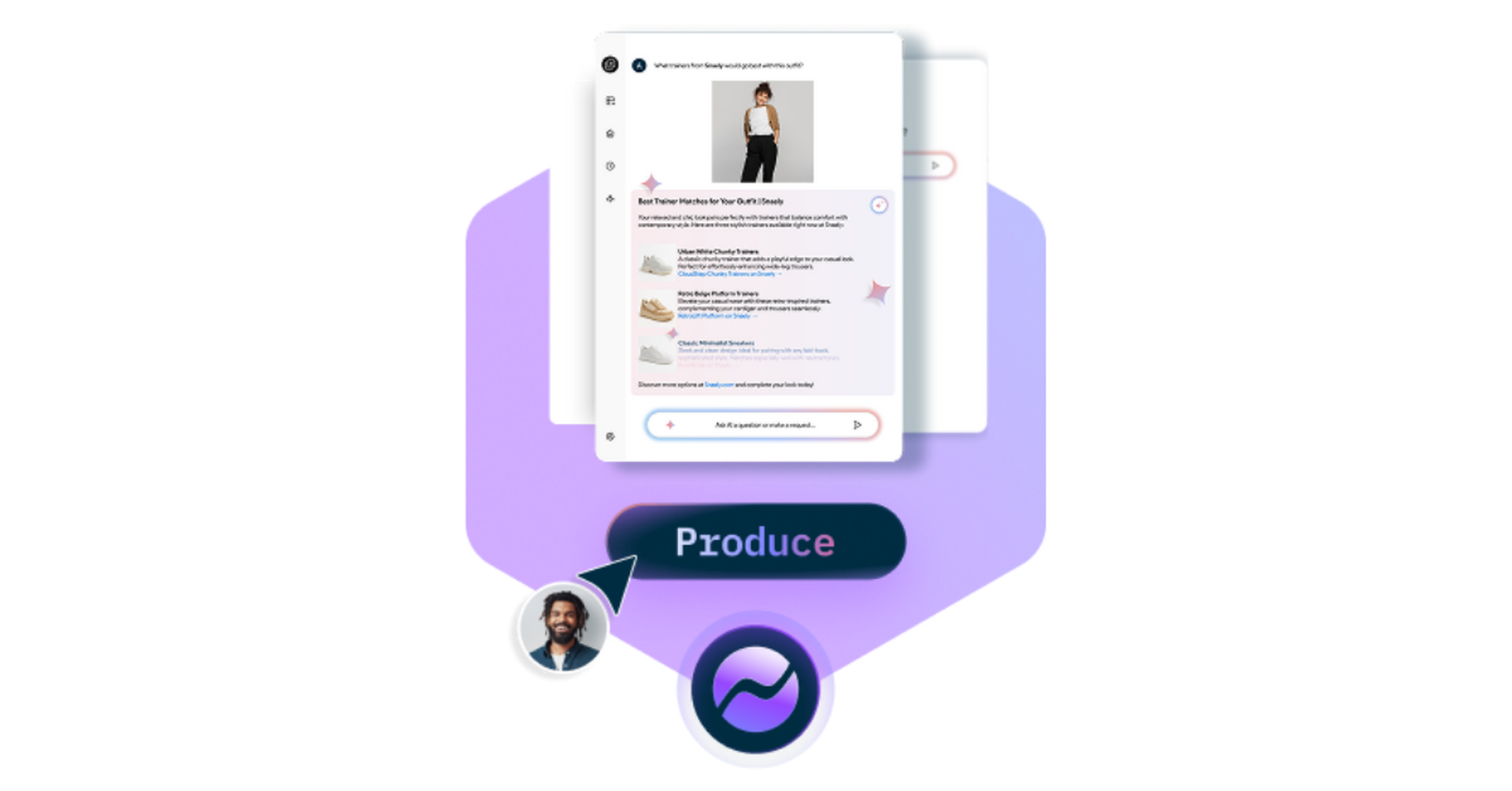
Digital interface showing fashion recommendations, "Produce" button below.

How Amplience powers the FMCG content supply chain

From new product launches to seasonal campaign content, here is how Amplience gives FMCG teams the speed to launch, the governance to stay compliant, and the scale to never slow down.

Agentic AI workflows that cut production from 5 days to 90 seconds

Content in this industry runs on cycles tied to seasons, promotions, and launches. A new product range hitting shelves needs product copy, imagery, recipe content, compliance text, localized variants, and channel-specific formats, all produced and published before the range goes live. With Amplience Workforce, that entire workflow can be triggered automatically. When a new SKU is added to your product feed, Workforce agents generate compliant product descriptions, resize and optimize imagery for every channel, and stage content for review, in minutes rather than days.

The same agentic capability works across your seasonal calendar. A summer grilling campaign, a Christmas gifting range, a product reformulation requiring updated nutritional copy across 14 markets. Workforce orchestrates the content supply chain from brief to published, with human review built into the workflow at exactly the right points. Your content team approves. Your brand stays protected.

But automation only works on structured content. You cannot automate chaos. Amplience is built schema-first, which means every piece of content is structured, versioned, and ready for the AI agents that produce it, the channels that serve it, and the AI discovery tools that surface it to shoppers.

Generative AI that works from your brand standards

Workforce Studio generates content from your brand guidelines, tone of voice, and compliance requirements, not from generic templates. For grocery and CPG brands, that means product descriptions written to your approved claims framework, recipe copy in your brand voice, localized campaign content adapted to regional trading standards, and nutritional copy that stays within your verified messaging. Every output is brand-aligned and audit-ready.

AI digital asset management built for brand governance

Managing digital assets in FMCG is a governance problem as much as a production one. Brands generate enormous volumes of digital assets, from product photography and recipe videos to lifestyle imagery, compliance documents, packaging artwork, and localized variants. Amplience Content Hub centralizes every asset in a single, searchable library. AI-powered tagging surfaces the right asset instantly. Role-based access controls ensure the right teams work with approved, on-brand assets, and nothing else.

Asset governance is especially critical when regulatory requirements mean that outdated packaging imagery or superseded nutritional claims cannot be allowed to persist in active use. Content Hub gives your team visibility and control. When a product is reformulated or a claim is updated, you can identify every instance of the affected asset across every channel and update or retire it in one action. Brand protection and compliance become operational, not aspirational.

A headless CMS that puts your content team in control

Amplience separates content management from front-end delivery, which means your content teams can publish, update, and personalize experiences without waiting for developer support. Business users build pages from modular components. Marketers schedule seasonal campaigns. Merchandisers update promotional banners in real time. No tickets. No queues. No bottlenecks.

For brands where promotional windows are measured in hours and seasonal moments cannot be missed, that agility is a direct competitive advantage. Your team moves at the speed your market demands. Not the speed your dev queue allows.

API-first, MACH-certified, and your foundation for agentic commerce

Amplience is API-first and MACH-certified, which means it integrates cleanly with the commerce platforms, PIM systems, and regional tools already in your stack. Asda, one of the UK’s largest supermarkets, invested in cloud-first technology with Salesforce, with Amplience as their experience partner. That composable foundation gives Asda the flexibility to scale their digital experience to match their customer ambitions.

AI discoverability is the new frontier for FMCG commerce. As consumers use AI tools to find recipes, compare products, and research brands, your content must be structured and accessible for AI agents to surface. Amplience’s schema-first content model means your product and editorial content is already structured for AI discovery. The next generation of shoppers is finding products through AI. Structured content is how you show up.

Trusted by the brands feeding the world's digital shelves

Real-world results

98%

faster release schedule

Traeger Grills’ team went from publishing content twice a month to daily capability after moving to Amplience’s headless CMS. The result was record-breaking sales performance, surpassing previous peaks typically seen only during major commercial holidays.
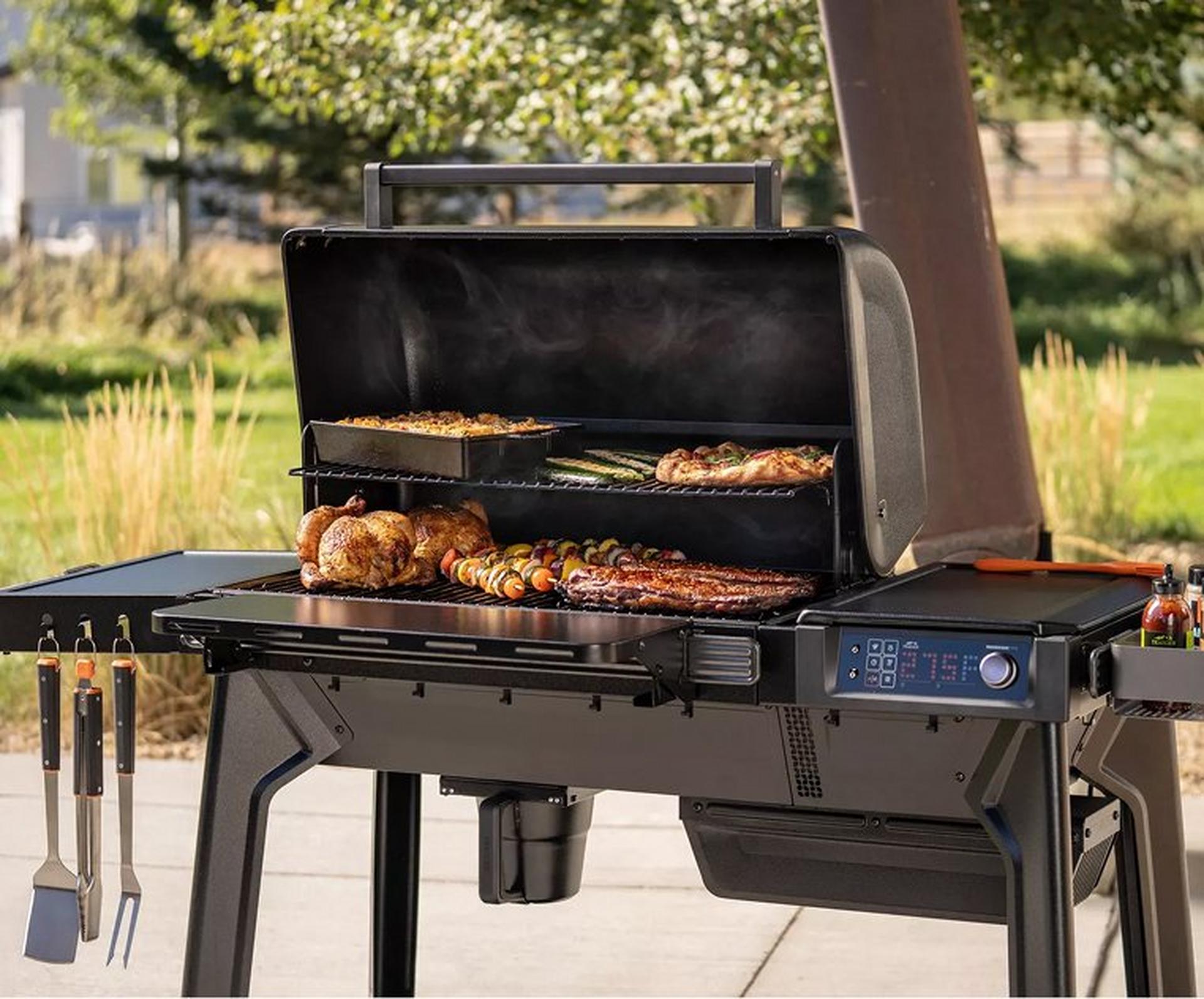
“The biggest thing is our ability to release new content daily or even multiple times a day. It creates a positive psychology not only for our team in that we are getting things changed and moving through production, but the business is able to see the mobile app and the website be a living breathing thing.“

Will Behunin, Director of Digital Platforms, Traeger Grills

Great brands deserve to be seen

Book a demo and see how Traeger Grills went from twice-monthly publishing to daily, and broke their own sales records doing it.

Frequently asked questions about content management for food and beverage brands

A headless CMS is a content management system that separates content creation and storage from front-end delivery. Instead of being tied to a single website template, content is delivered via API to any channel, including websites, mobile apps, in-store screens, smart devices, and AI discovery tools. For brands managing thousands of product lines, seasonal campaigns, and regional variants, a headless CMS provides the flexibility to publish once and reach every channel simultaneously, without rebuilding content for each touchpoint.

Amplience provides a fully integrated headless CMS and DAM platform purpose-built for commerce. Teams use Amplience to manage product content, recipe editorial, campaign imagery, and localized variants across every digital channel. AI-powered automation handles content production at scale, while governance tools ensure brand consistency and regulatory compliance across all outputs. Traeger Grills and Asda both run Amplience at the heart of their commerce stack.

Yes. Amplience is designed for multi-market, multi-language, content operations. Brands can create content once and localize it systematically across markets, with AI assistance for translation and regional adaptation. Governance controls ensure that market-specific regulatory requirements, nutritional claim standards, and labeling rules are respected at the content level, not just the legal review stage.

Seasonal peaks are the defining operational challenge for content teams in this category. Amplience Workforce allows brands to pre-build and schedule entire seasonal content programs, with AI agents generating product copy, imagery variants, and campaign assets in advance of launch windows. The Amplience platform is built on AWS global infrastructure and scales to handle traffic spikes during peak trading periods without compromising site performance. Teams can schedule, preview, and publish seasonal content at scale without developer dependency.

Amplience Content Hub is a purpose-built digital asset management system with AI-powered search and tagging. Teams use it to centralize product photography, recipe videos, lifestyle imagery, packaging artwork, and compliance documentation in a single, searchable library. Role-based access ensures that only approved, on-brand assets are used in active campaigns. When products are reformulated or labels updated, teams can identify and update every instance of an affected asset across all channels from a single action.

Amplience is API-first and MACH-certified, which means it integrates cleanly with leading commerce platforms, including Salesforce Commerce Cloud, commercetools, SAP, and Shopify, as well as PIM systems, analytics tools, and regional third-party services. Asda operates Amplience within a composable architecture alongside Salesforce. The platform ships with a library of pre-built integrations, UI extensions, and frontends to accelerate implementation and reduce integration risk.

Amplience offers three layers of AI capability for brands in the category. Agentic AI through Workforce automates end-to-end content workflows, from product feed ingestion to published copy. Generative AI produces brand-aligned product descriptions, campaign copy, recipe content, and localized variants at scale. AI-powered search and tagging in Content Hub ensures assets are findable, usable, and governed. All AI outputs work from your brand standards, not generic templates, so every piece of content stays on-brand and compliant.

Traeger Grills onboarded Amplience within three months and immediately shifted from a twice-monthly release schedule to daily publishing capability. The pace of value realization depends on integration complexity and content migration scope, but Amplience’s composable architecture supports a phased approach where brands can adopt individual capabilities, such as DAM or agentic content workflows, before expanding to the full platform. Implementation partners and Amplience’s professional services team support onboarding.

Amplience’s schema-first content model means that compliance-sensitive content fields, such as nutritional information, allergen declarations, and country-specific claims, can be structured, governed, and versioned independently of other content. Approval workflows ensure that content requiring legal or regulatory sign-off moves through the correct review process before publication. Role-based access controls prevent unauthorized changes to compliant content. When regulatory requirements change across markets, teams can identify and update affected content systematically rather than manually.

AI-powered search tools rank content based on how well-structured and machine-readable it is. For FMCG brands, that means product descriptions, nutritional information, and recipe content all need to be stored as structured data, not flat HTML. Amplience’s schema-first content model does this by design. Every content type is modeled and versioned in a way that AI discovery systems can parse and cite, so your products appear in AI-generated search results, recommendations, and comparisons at the moment shoppers are actively looking.

Most CMS platforms were built for websites. Amplience is built for commerce. The platform is designed specifically for brands managing high-volume, high-velocity content across multiple channels, markets, and formats. The combination of agentic AI workflows, generative content production, structured digital asset management, and MACH-certified API architecture is purpose-designed for the operational demands of commerce. Amplience customers consistently reduce content production time, improve time-to-market, and scale content output without proportional increases in team size.