Originally published July 2024. Updated November 2026 with personalization tactics, how to scale and measure personalization, privacy-first approaches, and insights from Shoptalk Europe 2025.
AI-driven personalization uses artificial intelligence to tailor content, product recommendations and offers to each shopper, based on what they browse, buy and search for. Generative AI takes it further by creating the content variants personalization needs, at a scale human teams can’t match. Amplience gives retailers the content platform to produce and deliver them.
Imagine walking into your favorite store, and every aisle, every product, even the very layout, seems to be tailored just for you. It’s as if the store knows exactly what you need, what you love, and what might catch your eye next. This isn’t a distant dream — this is the reality of AI-powered personalization in retail, and it’s transforming how we engage with brands online.
Key takeaways
AI-driven personalization tailors content, recommendations and offers to each shopper using their browsing, purchase and search behavior.
Content was always the bottleneck. Generative AI removes it by producing the variants each segment needs.
The biggest wins come from product recommendations, personalized landing pages, visual content, well-timed messages and tailored rewards.
Scaling personalization depends on modular content and a fast content supply chain, not just a personalization engine.
Measure it with conversion rate, average order value, retention and cart abandonment, and build it on consented first-party data.
What is AI-driven personalization?
Generative AI is more than just a buzzword; it’s the heartbeat of modern retail experiences. By leveraging advanced algorithms, generative AI creates unique, dynamic content for AI-powered personalization that speaks directly to each customer’s preferences and behaviors. This isn’t just about throwing random recommendations your way — it’s about delivering contextual content that feels as personal as a handwritten note. Amplience uses your product data, brand rules and shopper context to shape that content, so it fits the moment it appears in.
Why does contextual content matter?
You might wonder why contextual content is so crucial. Well, think about your own online shopping habits. When you search for something specific, whether through organic search or a social media link, you expect to find exactly what you’re looking for, right? Contextual content ensures that you do. It aligns perfectly with intent, turning casual browsers into engaged customers. With Amplience, you can serve different content to different entry points, so a shopper arriving from a social ad and one arriving from search each land on something that matches what they came for. Context goes beyond where a shopper came from. Weather, location and time of day shape what they want to see too, which is why beauty brands are turning to environment-responsive content.
Why was personalization so hard before generative AI?
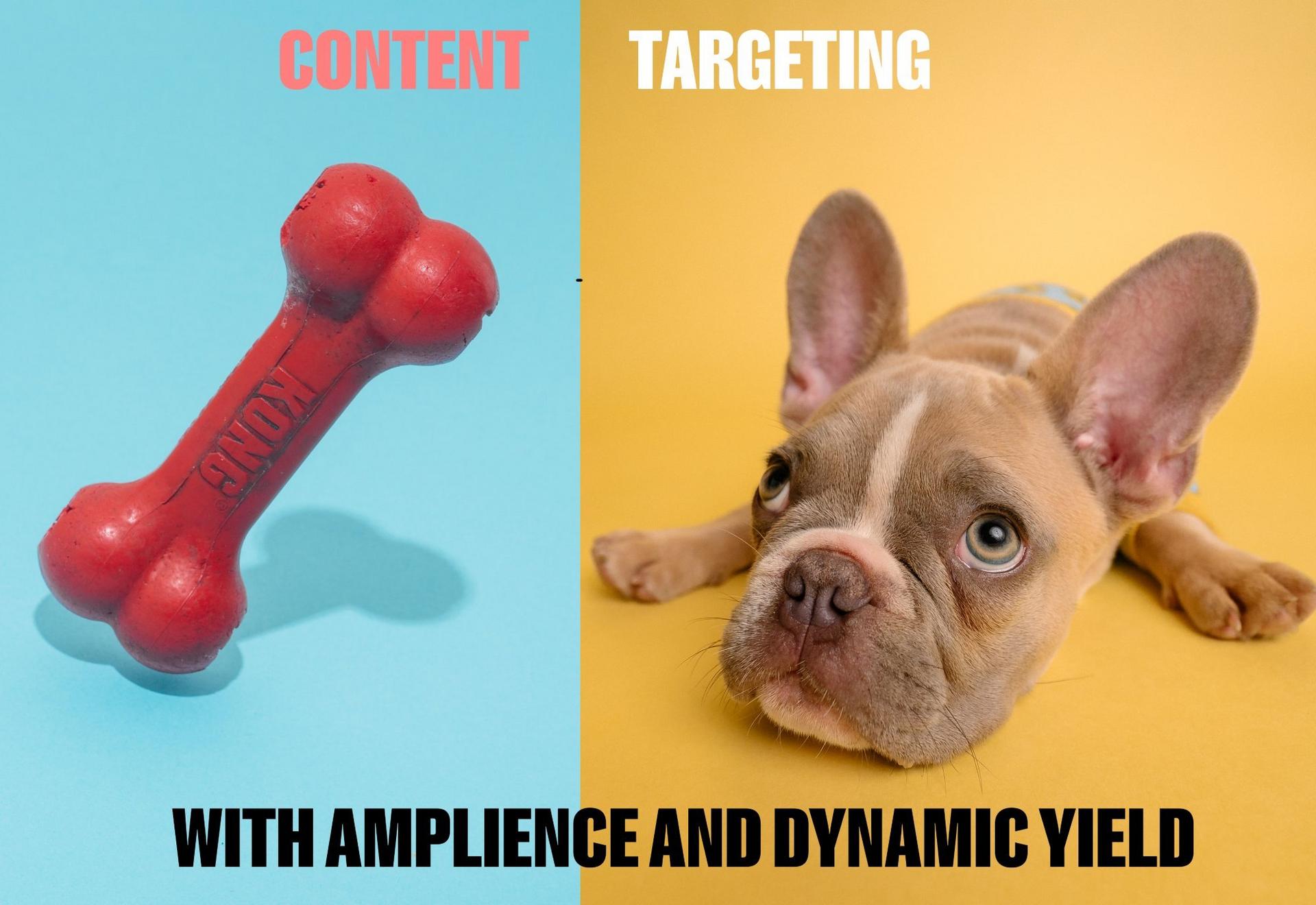
Personalization engines have long promised a revolution in retail, but there was always a stumbling block: content. The challenge was simple yet daunting — how do you create enough high-quality, relevant content to personalize the experience to each user effectively?
Before generative AI, this was nearly impossible. Retailers struggled with limited resources, often resulting in generic, one-size-fits-all content that failed to engage. You’ve probably experienced this yourself — landing on a website that felt impersonal, causing you to lose interest and bounce. Amplience was built to solve exactly this problem: making it practical to create and manage the volume of content personalization needs.
How does generative AI make personalization possible?
Generative AI flips the script by automating the creation of personalized content at scale. It analyzes vast amounts of data from Customer Data Platforms (CDPs), learning from every interaction to generate content that resonates with each individual. Whether it’s through product recommendations, dynamic landing pages, or personalized emails, generative AI ensures that every piece of content contributes to effective AI personalization tailored to a user’s unique journey. Amplience Workforce automates much of this production, from product copy to image variants for each segment.
71% of consumers expect companies to deliver personalized interactions, and 76% get frustrated when that doesn’t happen.
Where does AI personalization make the biggest difference?
Product recommendations
Remember the last time you bought a product and immediately received recommendations that just made sense? That’s generative AI at work. By understanding your preferences and previous interactions, it curates a list of products that align with your tastes, which not only enhances your shopping experience but also boosts conversion rates as you’re more likely to find products you love.
The best recommendations aren’t just similar products. They’re complementary ones that anticipate the next search, such as the shoes and bag that finish an outfit, or the rest of a skincare routine. AI can also suggest alternatives when something is out of stock. Amplience AI Bundling, powered by Stylitics, adds AI-driven outfits and bundles to product pages, which lifts engagement and average order value.
The same thinking applies to on-site search. Searchandising, also called search merchandising, uses AI and behavioral data to rank results by what each shopper is most likely to want. It changes the merchandiser’s job too. AI takes on repetitive work, such as sorting rules and stock replenishment, so merchandisers can focus on storytelling and strategy.
Dynamic landing pages
Imagine clicking on a link from a social media post and landing on a page that feels like it was designed just for you. Dynamic landing pages, powered by generative AI, adapt in real-time to reflect your interests and needs. This personalized touch reduces bounce rates and keeps you engaged, guiding you smoothly through your shopping journey. In Amplience, landing pages are built from modular content blocks, so each one can change for a segment without a developer rebuilding the page.
Personalized visual content
Shoppers decide fast, and images do most of the work. One or two product shots reused across every channel won’t hold anyone’s attention. Generative AI lets merchandisers and marketers create image variants for each campaign, channel and audience without waiting on a creative brief. Amplience generates those variants from a single asset and delivers them optimized for every device.
Inspirational product content
Shoppers also want product stories: rich descriptions, buying guides and styling ideas that help them decide. Research from the Gies College of Business found that inspirational messaging, used instead of promotions, can lift sales by 13 to 31%. AI makes it possible to produce that content for each audience, season and location, and Amplience shapes it with your tone of voice and product data.
The right message at the right moment
Timing turns good personalization into sales. Think of a reminder when a basket is abandoned, a nudge before the birthday a shopper bought a gift for last year, or a welcome offer on a first visit. AI spots these moments in order and browsing data. Amplience lets you schedule content around customer behavior, not just calendar dates.
Rewards that feel personal
Generic loyalty programs feel transactional. Rewards tailored to purchase history feel like recognition: exclusive offers for your best customers, a birthday discount that arrives on time, perks tied to the brands each shopper loves most.
How does personalization affect customer lifetime value?
When you feel seen and understood by a brand, you’re more likely to stick around and purchase time and time again. This is where the impact of AI personalization on customer lifetime value (CLV) shines. By continuously delivering relevant, personalized experiences, it fosters loyalty and long-term engagement. You become more than just a customer — you become a brand advocate.
How do you personalize at scale?
Most personalization programs stall for the same reason: the content can’t keep up. A personalization engine decides what each shopper should see, but someone still has to make it. Scaling personalization comes down to your content supply chain, the end-to-end system for planning, producing and publishing content.
Modular content\ Build pages from reusable blocks that adapt to each segment, instead of building a new page for every audience.
Fast production\ Use AI to generate the copy and image variants each segment needs, with people reviewing before anything goes live.
One place to run it\ Plan, produce and launch campaigns from one platform, so content reaches every channel at the same time.
Amplience is built for this. You create content once, in a modular format, and it adapts across websites, apps and social channels depending on who’s viewing it. It handles millions of personalized interactions without slowing down, even at Black Friday peaks, and connects to your customer data platform, AI tools and commerce systems such as Shopify.
Don’t try to personalize everything at once. Start with a few strategic data points and the touchpoints where personalization matters most to your customers. Prove the value, then add more.
At Shoptalk Europe 2025, the balance between automation and authenticity ran through every AI session. LVMH’s Julie De Moyer talked about opening up data access across teams to personalize experiences, and LEGO’s Natali Stojovic showed AI powering immersive product discovery. Amplience Co-CEO and CTO John Williams joined leaders from MikMak, Zeotap, myAthena and Deloitte Digital on a panel about speeding up personalization without losing authenticity. The message from the stage was consistent: AI is brilliant at accelerating personalized content, but the brands getting it right are rebuilding their content operations around it, not just adding tools.
How do you measure personalization?
Personalization gets better when you test it. Run personalized landing pages against generic ones, compare recommendation strategies, and keep what works. Amplience CMS connects to experimentation tools such as Dynamic Yield, so you can test personalized content straight from your CMS.
Track the metrics that show impact on the bottom line:
Conversion rate from tailored content and recommendations
Average order value from product suggestions and bundles
Customer retention from personalized experiences
Cart abandonment rate from targeted recovery campaigns
How do you personalize without losing customer trust?
Personalization only works if customers trust you with their data. Build it on consented first-party data, the information shoppers choose to share with you, and be clear about what they get in return: better recommendations, more relevant offers and less noise. That approach earns trust and prepares you for tighter privacy regulation.
How do you get started with AI-driven personalization?
So, how can you, as an eCommerce professional, harness the power of generative AI to transform your customer experiences?
Invest in robust Customer Data Platforms (CDPs): Ensure you have a solid foundation for collecting and analyzing customer data. This data is the fuel for your AI personalization engines.
Leverage advanced personalization engines: Choose personalization engines that integrate seamlessly with your CDPs and can leverage generative AI to create tailored content.
Focus on contextual content: Always aim to deliver content that aligns with customer intent. Whether they’re coming from an organic search or a social media link, ensure the content they land on is relevant and engaging.
Continuous optimization: Use the insights from generative AI to continuously refine and improve your content strategy. Remember, the goal is to keep your customers engaged and delighted at every touchpoint, driving them to purchase.
Build content that can adapt: Use modular content blocks so one page can serve many segments. Amplience is built around this structure.
Start small, then scale: Pick a few high-value touchpoints and data points, prove the impact, then expand.
AI-driven personalization, fueled by generative AI, is not just a trend — it’s the future of retail. By delivering contextual content and creating AI-powered personalization experiences, it transforms how customers interact with your brand. So, step into this new era of retail, where every interaction feels personal, meaningful, and unforgettable. Your customers will thank you for it.
Book a meeting with a member of our team today and find out how Amplience can help you deliver personalized, conversion-driving digital experiences.